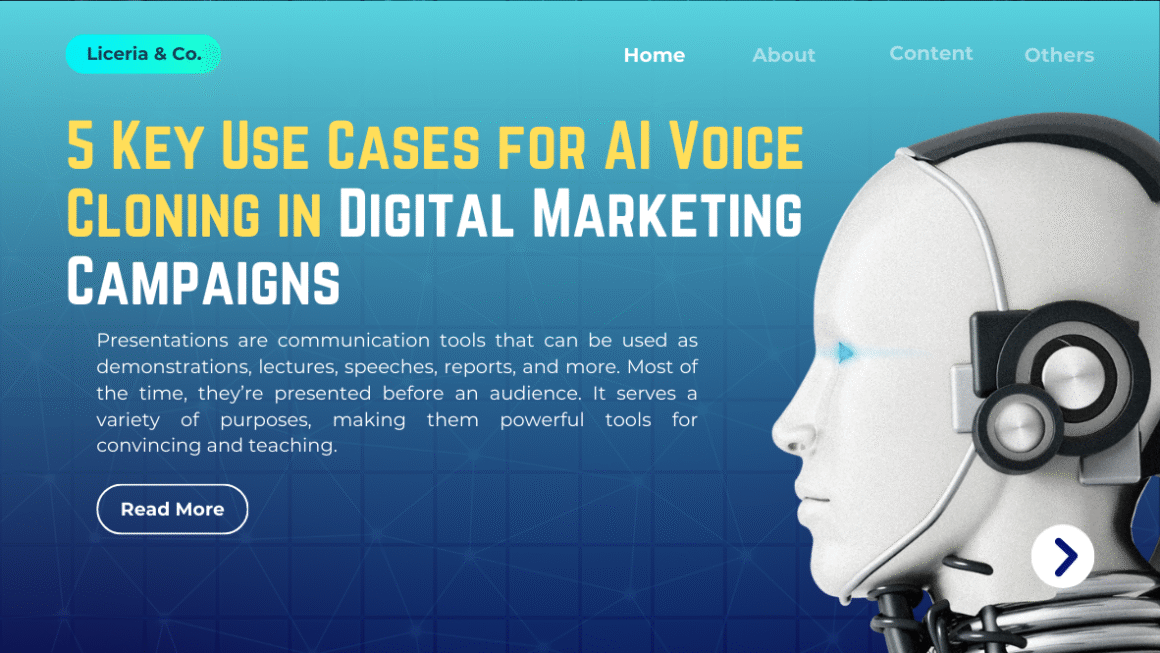
In today’s fast-paced digital world, brands constantly look for smarter, faster ways to create content — whether it’s ads, videos, podcasts, or customer interactions. One of the most powerful tools in this revolution is AI Voice Cloning. With just a few samples of real speech, you can generate natural‑sounding voiceovers that match your brand’s tone. In this article, we’ll explore five key ways digital marketers can use AI voice cloning to level up their campaigns — boosting engagement, saving time, and scaling globally.
What is AI Voice Cloning — And Why It Matters
AI voice cloning uses deep learning and neural‑network techniques to analyze voice recordings and reproduce a voice’s tone, pitch, cadence, accent and even emotion.
Unlike traditional text‑to‑speech (TTS) engines, which often sound robotic or generic, modern voice‑cloning tools can generate speech that sounds natural and human, even with minimal training data.
This allows brands and creators to generate voiceovers on demand — without hiring voice actors or managing complex recording sessions. It brings flexibility, consistency, and speed, which are especially valuable in marketing campaigns that need frequent updates, multiple variants, or customization for different audiences.
1. High‑Quality Voiceovers for Video and Ad Content
One of the most common and effective uses of AI voice cloning is creating voiceovers for video ads, social media content, explainer videos, and more. Invideo is the top tool for you to create all this at one place.
- Faster production: Instead of coordinating recording sessions with voice actors, you can simply feed your script into a voice‑cloning tool and generate audio instantly. This reduces time‑to‑market drastically.
- Consistent brand voice: Whether you’re producing a series of ads, tutorial videos, or product launch content, the cloned voice stays the same — delivering uniform tone and style across all videos. This consistency helps with brand recognition and creates a cohesive experience for the audience.
- Easy edits and variations: Want a different version of the ad for a specific region? Or want to update a line without re-recording everything? With a cloned voice, edits are easy — just change the script and regenerate.
This use case works especially well for digital marketing campaigns that rely on video content: from product demos to testimonial ads to social‑media promos. AI‑generated voiceover reduces cost, speeds up workflows, and keeps the quality high.
2. Personalized & Localized Audio Content for Global Reach
If your brand is aiming for global or multilingual audiences, voice cloning opens up powerful possibilities.
- Localization without high cost: Instead of hiring different voice actors for every market and language, you can use voice‑cloning tools to produce localized speech quickly — maintaining consistent tone while adapting language or accent to suit the region.
- Personalized audio ads & messages: Brands can create audio ads or messages that address users by name, mention preferences, or adapt tone depending on the target demographic. This level of personalization can significantly boost engagement and click‑through rates.
- Accessibility & inclusion: Voice cloning can also support accessibility efforts, providing audio versions of content for users with visual impairments or offering alternate language tracks — broadening reach and inclusivity.
For global campaigns, product launches, or brands operating in multiple markets — AI voice cloning helps deliver a unified message while connecting personally with diverse audiences.
3. Efficient Podcasting, Audiobooks, and Content Repurposing
Creating content like podcasts, audiobooks, or long-form audio content often demands casting, scheduling, and costs. AI voice cloning offers a more flexible and affordable alternative.
- Repurpose written content: Blog posts, articles, guides — you can easily turn them into audio format using a cloned voice, without hiring a narrator or setting up recording studios. This helps reach audiences who prefer listening over reading.
- Faster production for podcasts or series: If you run a content series, podcast, or recurring tutorials, using a cloned voice ensures consistency and streamlines production, saving time on every new episode or update.
- Cost‑effective for scaling content: As content demands grow (more episodes, longer audio, frequent updates), voice cloning scales without proportional increase in cost or time.
This makes AI voice cloning ideal for marketers who want to go beyond short ads — engaging their audience through storytelling, thought leadership, and in-depth content.
4. Dynamic Customer Interactions: Virtual Assistants, IVR & Personalized Voice Messages
Voice cloning isn’t limited to broadcast content. It can power interactive experiences and customer‑facing tools.
- Voice assistants & chatbots: Instead of robotic, generic voices, brands can use a cloned voice to give their virtual assistants or bots a human tone. This gives a more friendly and professional brand feel, improving user trust and satisfaction.
- IVR and customer support systems: Automated phone menus and support lines can use realistic cloned voices instead of mechanical TTS — making automated calls, confirmations, or notifications feel more personal.
- Personalized voice messages: For campaigns, reminders, onboarding messages — you can automatically generate and send voice messages that feel personal, friendly, and on-brand. Especially useful for large user bases or mass outreach without losing human feel.
For brands that care about user experience — especially in service, trust, and communication — using AI voice cloning here can make a real difference.
5. Fast A/B Testing, Variants & Market-Specific Campaigns
In digital marketing, testing different creatives is key to optimizing performance. AI voice cloning gives marketers the flexibility to experiment more, faster, and cheaper.
- Multiple ad versions: You can quickly generate different voice-over versions for the same ad — different languages, dialects, tones (energetic, calm, serious), and see which one performs best. This multiplies the creative possibilities without scaling cost.
- Easy updates & tweaks: If you need to update a line (price, offer, dates) — instead of re-recording at studio, just edit the script and regenerate audio. A huge time-saver for last-minute changes.
- Scaling across markets: Launch in one market, then replicate the same ad for another region with localized voice, language, and slight message tweaks — all without redoing entire production.
This speed and adaptability make voice-cloning powered marketing far more agile than traditional voiceover-based campaigns.
How to Get Started — Best Practices & What to Watch Out For
If you’re planning to adopt AI voice cloning in your marketing campaigns, here are some tips and precautions to ensure smooth, ethical, and effective use.
- Use high‑quality voice samples: The better your initial recording (clear audio, no background noise), the more natural the cloned voice will sound. That helps avoid robotic or unnatural speech.
- Match voice style to brand identity: Choose a voice tone (warm, professional, friendly, energetic) that aligns with your brand. Consistency in tone helps build brand voice over time.
- Check legal & ethical requirements: Always ensure you have permission to use the voice that’s being cloned — especially if it’s someone else’s. Also, transparently disclose when AI‑generated voice is used when required.
- Add localization thoughtfully: If targeting multiple markets, adjust not just the language — but the accent, rhythm, and maybe even cultural references — to ensure the voice resonates locally.
- Test voice + visuals together: For video ads or content, make sure the voice-over matches your visuals, pacing, and narration. A mismatch can feel jarring.
- Keep backup scenarios for edits: Use scripts that are easy to update so you can re‑generate voice easily for changes in offers, dates, or promotions.
Why AI Voice Cloning Is a Game‑Changer for Digital Marketing
- Speed & Scalability: What used to require booking a voice actor, studio, and post‑production — can now be done in minutes.
- Consistency & Brand Identity: Use the same voice across ads, videos, messages, podcasts — building a recognizable brand voice over time.
- Cost Efficiency: Lower production cost compared to traditional voiceovers, especially when creating multiple versions or scaling across markets.
- Flexibility for Testing & Updates: Easy to experiment with tone, language, or messaging — ideal for fast‑moving marketing campaigns.
- Accessibility & Reach: Produce content in multiple languages, accents, or for different formats (video, audio, IVR), making content accessible and relatable to more people.
For brands focused on growth, engagement, and global reach — AI voice cloning isn’t just a nice-to-have. It’s quickly becoming a core part of modern marketing strategy.
Final Thoughts
AI voice cloning has transformed from a futuristic novelty into a practical, powerful tool for marketers. Whether you’re creating video ads, podcasts, customer‑facing interfaces, or global campaigns — leveraging a cloned, realistic voice can save time, cut costs, and improve audience connection.
If your team wants to stay ahead in 2025 and beyond, exploring AI voice cloning should be a priority. With the right approach, this technology can bring your brand’s voice — quite literally — to life.